
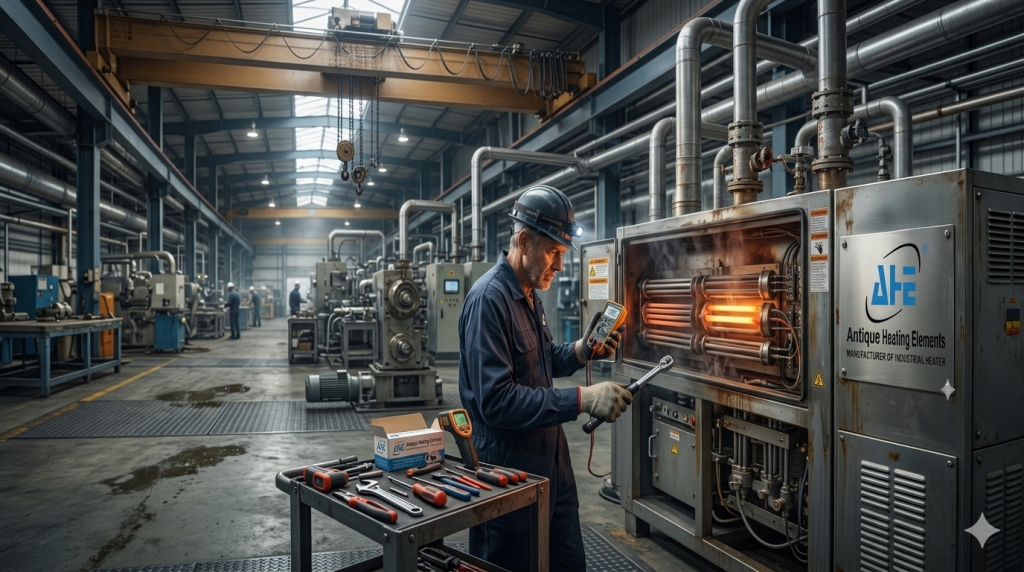
Industrial heaters are critical components in manufacturing processes such as plastic molding, packaging, chemical processing, and food production. However, like any industrial equipment, heating elements can develop issues over time due to continuous usage, environmental conditions, and improper handling.
Unexpected heater failures can lead to production downtime, increased energy costs, and poor product quality—all of which directly impact your business profitability.
In this detailed guide, we’ll explore the most common industrial heater problems, their root causes, and practical solutions to fix and prevent them.
🔥 What Are Common Industrial Heater Problems?
Common industrial heater problems include overheating, uneven heating, insulation failure, power issues, and premature heater burnout. These issues can be resolved through proper installation, regular maintenance, correct voltage supply, and timely replacement of faulty components.
🔧 Common Industrial Heater Problems & Solutions
1️⃣ Overheating
🔍 Problem
Overheating is one of the most frequent issues in industrial heaters. It occurs when the heater temperature exceeds its rated limit.
⚠️ Causes
- Incorrect voltage supply
- High watt density
- Poor heat dissipation
- Lack of temperature control
✅ Solutions
- Always use heaters with the correct voltage rating
- Install temperature controllers and sensors
- Ensure proper contact between heater and surface
- Use appropriate watt density for the application
💡 Pro Tip
Overheating can significantly reduce heater lifespan and increase energy consumption.
2️⃣ Uneven Heating
🔍 Problem
Uneven heating leads to inconsistent temperature distribution, affecting product quality.
⚠️ Causes
- Improper installation
- Loose fitting
- Damaged heating elements
- Poor insulation
✅ Solutions
- Reinstall heater with proper fitting
- Ensure tight surface contact
- Replace damaged elements
- Use high-quality insulation materials
3️⃣ Heater Failure (Burnout)
🔍 Problem
Heater burnout occurs when the heating element stops working completely.
⚠️ Causes
- Wear and tear
- Overheating
- Voltage fluctuations
- Moisture ingress
✅ Solutions
- Replace the damaged heater immediately
- Use moisture-resistant heaters
- Maintain stable voltage supply
- Avoid overloading
4️⃣ Insulation Failure
🔍 Problem
Insulation failure can cause heat loss, short circuits, and safety hazards.
⚠️ Causes
- Aging insulation material
- Exposure to moisture or chemicals
- Mechanical damage
✅ Solutions
- Replace insulation periodically
- Use high-quality insulation materials
- Protect heaters from harsh environments
5️⃣ Power Supply Issues
🔍 Problem
Irregular power supply can cause heater malfunction or inconsistent performance.
⚠️ Causes
- Voltage fluctuations
- Loose electrical connections
- Faulty wiring
✅ Solutions
- Use voltage stabilizers
- Regularly inspect electrical connections
- Ensure proper wiring installation
6️⃣ Slow Heating
🔍 Problem
Heaters taking longer than usual to reach the desired temperature.
⚠️ Causes
- Low watt density
- Heat loss due to poor insulation
- Aging heating elements
✅ Solutions
- Upgrade to higher watt density heaters
- Improve insulation
- Replace old heaters
7️⃣ Short Circuits
🔍 Problem
Short circuits can damage heaters and pose safety risks.
⚠️ Causes
- Damaged insulation
- Moisture exposure
- Faulty wiring
✅ Solutions
- Use waterproof heaters where necessary
- Inspect insulation regularly
- Fix wiring issues immediately
8️⃣ Mechanical Damage
🔍 Problem
Physical damage to heaters due to mishandling or harsh environments.
⚠️ Causes
- Improper installation
- External impact
- Vibrations
✅ Solutions
- Handle heaters carefully
- Use protective covers
- Ensure proper installation
🛠️ Preventive Maintenance Tips
Preventing heater problems is always more cost-effective than fixing them.
✔ Regular Inspection
Check heaters for wear, damage, and performance issues.
✔ Proper Installation
Ensure correct fitting and alignment.
✔ Use Quality Products
Invest in reliable heaters for long-term performance.
✔ Maintain Voltage Stability
Avoid fluctuations that damage heating elements.
✔ Clean Regularly
Remove dust and contaminants that affect performance.
⚙️ Importance of Choosing the Right Heater
Selecting the correct industrial heater plays a major role in avoiding problems.
Consider:
- Temperature requirements
- Application type
- Material compatibility
- Environmental conditions
Using the wrong heater can lead to frequent failures and increased maintenance costs.
🚀 Why Choose Antique Heating Elements?
At Antique Heating Elements, we provide:
✔ High-quality industrial heaters
✔ Custom-designed solutions
✔ Long-lasting performance
✔ PAN India supply
Our products are designed to minimize failures and maximize efficiency.
🔚 Conclusion
Industrial heater problems are common but can be effectively managed with proper knowledge, maintenance, and the right equipment. Issues like overheating, uneven heating, and power failures can disrupt operations, but with timely troubleshooting and preventive measures, you can ensure smooth and efficient performance.
Investing in high-quality heating elements and following best practices will not only reduce downtime but also improve productivity and energy efficiency.
