
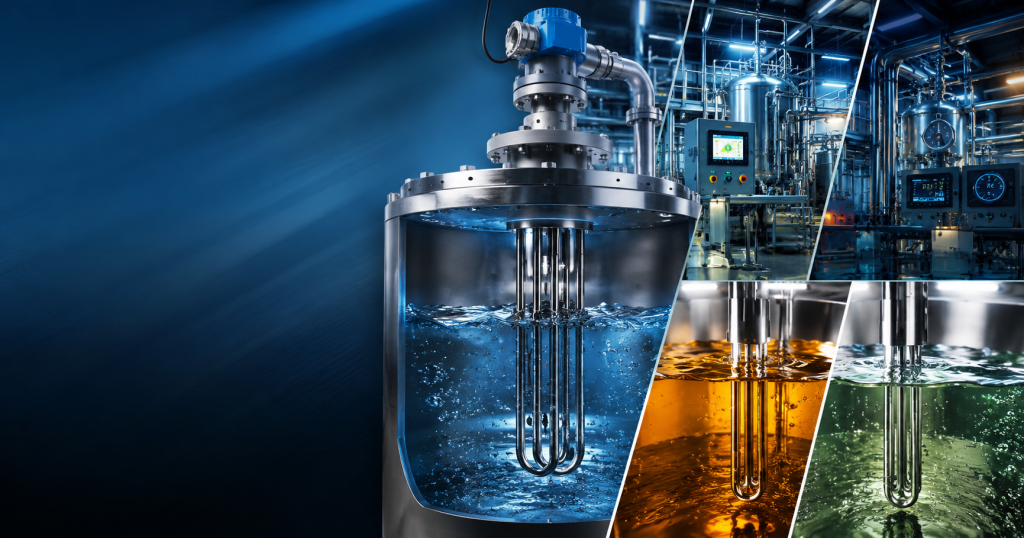
Industrial heating is an essential part of modern manufacturing, chemical processing, food production, pharmaceuticals, oil & gas, and water treatment. Among the various industrial heating technologies available today, the Immersion Heater is one of the most efficient, reliable, and cost-effective solutions for directly heating liquids.
Whether you need to heat water, oil, chemicals, acids, solvents, or industrial process fluids, immersion heaters provide fast heat transfer with minimal energy loss.
Unlike indirect heating systems, immersion heaters are installed directly inside the liquid, allowing nearly 100% heat transfer efficiency while maintaining precise temperature control.
This comprehensive guide explains everything you need to know about immersion heaters—from their working principle and different types to industrial applications, advantages, maintenance, and selection criteria.
Table of Contents
- What is an Immersion Heater?
- How Does an Immersion Heater Work?
- Components of an Immersion Heater
- Types of Immersion Heaters
- Industrial Applications
- Water Immersion Heater
- Industrial Immersion Heater
- Materials Used
- Temperature Range
- Watt Density
- Advantages
- Selection Guide
- Installation Tips
- Maintenance
- Common Problems
- Safety Tips
- Why Choose Antique Heating Elements?
- FAQs
- Conclusion
What is an Immersion Heater?
An Immersion Heater is an electric heating device designed to heat liquids by being submerged directly into the fluid.
It converts electrical energy into thermal energy through a high-resistance heating element enclosed within a protective metal sheath.
Because the heating element remains in direct contact with the liquid, immersion heaters provide:
- Faster heating
- Higher efficiency
- Lower operating costs
- Uniform temperature distribution
They are widely used across industries requiring continuous liquid heating.
How Does an Immersion Heater Work?
The working principle is simple.
Electric current flows through a high-resistance heating coil made from Nichrome wire.
The resistance generates heat according to Joule’s Law.
The heat passes through:
Heating Coil
↓
Magnesium Oxide Insulation
↓
Metal Sheath
↓
Liquid
↓
Temperature Rise
Since the heater is immersed directly inside the liquid, almost all generated heat is transferred efficiently.
Components of an Immersion Heater
Heating Element
High-quality Nichrome resistance wire.
Magnesium Oxide Powder
Provides excellent electrical insulation while ensuring efficient heat transfer.
Metal Sheath
Available in:
- Stainless Steel
- Incoloy
- Titanium
- Copper
- Mild Steel
The sheath protects against corrosion and mechanical damage.
Terminal Box
Provides electrical connections and moisture protection.
Thermostat (Optional)
Automatically controls liquid temperature.
Flange or Screw Plug
Allows secure installation into tanks or vessels.
Types of Immersion Heaters
1. Screw Plug Immersion Heater
Ideal for:
- Water tanks
- Small process vessels
- Boilers
- Washing equipment
Advantages
- Compact
- Easy installation
- Low maintenance
2. Flanged Immersion Heater
Best suited for:
- Large storage tanks
- Chemical reactors
- Oil tanks
- Industrial processing
Advantages
- High power ratings
- Heavy-duty construction
- Replaceable heating bundle
3. Over-the-Side Immersion Heater
Perfect when tank modification isn’t possible.
Applications
- Electroplating
- Chemical tanks
- Cleaning tanks
Advantages
- Portable
- Easy removal
- No flange required
4. Circulation Heater
Uses an enclosed chamber where fluid flows over the heating elements.
Applications
- Oil heating
- Gas heating
- High-pressure systems
Advantages
- Uniform heating
- Controlled flow
- Higher efficiency
5. Quartz Immersion Heater
Used for highly corrosive chemicals.
Applications
- Acid baths
- Laboratory heating
Water Immersion Heater
Water immersion heaters are specially designed for heating potable water, process water, and industrial water storage tanks.
Common applications include:
- Hotels
- Hospitals
- Solar water systems
- Food industries
- Boiler feed water
- Water treatment plants
- Textile processing
Benefits:
- Rapid heating
- Energy efficiency
- Reliable temperature control
- Long service life
Industrial Immersion Heater
Industrial immersion heaters are engineered for demanding environments where continuous operation and high temperatures are required.
Industries include:
Chemical Industry
Heating:
- Acids
- Solvents
- Alkalis
- Chemical mixtures
Oil Industry
Heating:
- Fuel oil
- Hydraulic oil
- Lubricating oil
- Transformer oil
Food Industry
Used for:
- Cooking oil
- Syrup
- Dairy products
- Beverage processing
Pharmaceutical Industry
Maintains precise temperatures for:
- Sterile water
- Process liquids
- Pharmaceutical formulations
Plastic Industry
Supports:
- Mold temperature control
- Resin heating
- Process tanks
Textile Industry
Used for:
- Dye tanks
- Chemical baths
- Washing processes
Materials Used in Immersion Heaters
| Material | Best For |
|---|---|
| Copper | Clean water |
| Stainless Steel 304 | Water |
| Stainless Steel 316 | Chemicals |
| Incoloy | High temperatures |
| Titanium | Corrosive liquids |
| Mild Steel | Oil |
Temperature Range
Typical operating temperatures:
Water:
30°C–95°C
Oil:
80°C–350°C
Chemicals:
Depends on chemical compatibility
High-temperature industrial heaters:
Up to 800°C
Watt Density
Watt Density refers to the amount of power generated per unit area.
Lower Watt Density
Suitable for:
- Oil
- Chemicals
- Viscous liquids
Higher Watt Density
Suitable for:
- Water
- Clean liquids
Selecting the correct watt density extends heater life and prevents overheating.
Advantages of Immersion Heaters
✔ Nearly 100% heat transfer efficiency
✔ Faster heating
✔ Compact design
✔ Easy installation
✔ Low maintenance
✔ Energy efficient
✔ Precise temperature control
✔ Long service life
✔ Suitable for almost every liquid
✔ Available in custom designs
How to Select the Right Immersion Heater
Before purchasing, consider:
1. Type of Liquid
Water
Oil
Chemical
Acid
Food-grade liquid
2. Temperature Requirement
Determine operating temperature.
3. Tank Size
Calculate liquid volume.
4. Voltage
Common options:
230V
415V
440V
480V
5. Wattage
Select appropriate heating capacity.
6. Material Compatibility
Choose corrosion-resistant sheath material.
7. Installation Method
- Screw Plug
- Flange
- Over-the-side
- Circulation
8. Safety Features
Include:
- Thermostat
- Thermocouple
- Temperature controller
- High-limit protection
Installation Tips
Always ensure the heater is completely submerged before switching it on.
Use appropriate circuit protection.
Install proper grounding.
Avoid dry firing.
Use temperature controllers for automatic operation.
Maintenance Tips
Inspect terminals regularly.
Check insulation resistance.
Clean scale deposits.
Inspect sheath for corrosion.
Replace damaged gaskets.
Avoid operating in low liquid levels.
Common Problems
Heater Not Heating
Possible causes:
- Burnt element
- Loose wiring
- Power failure
Overheating
Possible causes:
- Dry firing
- Wrong watt density
- Thermostat failure
Corrosion
Cause:
Incorrect sheath material.
Scale Formation
Occurs in hard water applications.
Regular cleaning is recommended.
Safety Tips
Always disconnect power before maintenance.
Use certified electrical protection.
Ensure correct grounding.
Never energize a dry heater.
Install level sensors for automatic shutdown.
Why Choose Antique Heating Elements?
At Antique Heating Elements (AHE), we manufacture high-performance industrial immersion heaters designed for reliable and energy-efficient operation across demanding industrial environments.
Why Customers Choose AHE
- Custom-designed immersion heaters
- Premium-grade stainless steel and Incoloy materials
- High thermal efficiency
- Fast manufacturing and delivery
- Stringent quality testing
- Competitive pricing
- Technical selection support
- Pan-India supply
- Solutions for water, oil, and chemical heating applications
Whether you require a standard water immersion heater or a custom industrial oil immersion heater for specialized processes, AHE offers solutions tailored to your operational requirements.
Frequently Asked Questions
What is an immersion heater?
An immersion heater is an electric heating element installed directly inside a liquid to provide fast and efficient heating.
What is the difference between a water immersion heater and an industrial immersion heater?
A water immersion heater is primarily designed for heating clean or potable water, while an industrial immersion heater is built to withstand higher temperatures, corrosive fluids, oils, chemicals, and continuous-duty industrial applications.
Which material is best for immersion heaters?
The ideal sheath material depends on the application:
- Stainless Steel – Water and general industrial use
- Incoloy – High-temperature applications
- Titanium – Corrosive chemicals
- Copper – Clean water
- Mild Steel – Oils and non-corrosive fluids
How efficient is an immersion heater?
Because the heating element is directly immersed in the liquid, immersion heaters can achieve nearly 100% heat transfer efficiency, minimizing energy loss.
Can immersion heaters heat oil?
Yes. Industrial immersion heaters are widely used for heating lubricating oil, hydraulic oil, fuel oil, transformer oil, and edible oils. Lower watt density designs are typically recommended to prevent oil degradation.
What is watt density?
Watt density is the amount of heating power generated per unit surface area of the heating element. Choosing the correct watt density helps prevent overheating and extends heater life.
Conclusion
Immersion heaters are among the most efficient and versatile industrial heating solutions available today. Their ability to deliver direct, uniform heating makes them ideal for water, oil, chemical processing, food production, pharmaceuticals, and countless other industrial applications.
By selecting the correct heater type, sheath material, watt density, and control system, businesses can improve process efficiency, reduce energy consumption, and ensure long-term operational reliability.
If you’re looking for high-quality industrial immersion heaters or water immersion heaters, Antique Heating Elements provides custom-engineered solutions backed by technical expertise and dependable support.
