
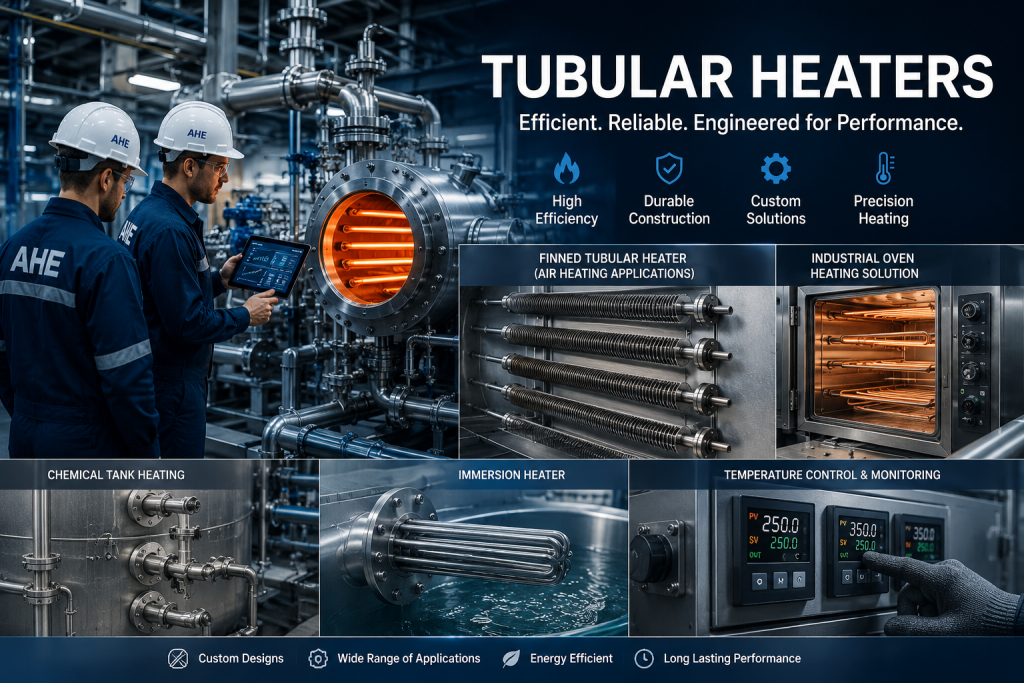
Industrial heating is the backbone of countless manufacturing processes, from plastic molding and chemical processing to food production and HVAC systems. Among the many heating technologies available, the tubular heater stands out as one of the most versatile, reliable, and efficient solutions.
Whether used for heating liquids, air, molds, tanks, or industrial equipment, industrial tubular heaters deliver consistent performance even in demanding environments.
In this guide, we’ll explain how tubular heaters work, their different types, advantages, applications, and how to choose the right heater for your industrial process.
What is a Tubular Heater?
A tubular heater is an electric heating element consisting of a resistance wire enclosed within a metal tube. The resistance wire is insulated with highly compacted magnesium oxide (MgO), which provides excellent electrical insulation while allowing efficient heat transfer.
The outer sheath is commonly manufactured using:
- Stainless Steel
- Incoloy
- Copper
- Mild Steel
- Titanium
Tubular heaters are designed to convert electrical energy into heat and can be custom-shaped to fit different industrial equipment and processes.
How Does a Tubular Heater Work?
The working principle is straightforward and highly efficient.
Step 1: Electrical Supply
Electric current passes through a high-resistance heating wire.
Step 2: Heat Generation
The resistance converts electrical energy into thermal energy (Joule Heating).
Step 3: Heat Transfer
The magnesium oxide insulation rapidly transfers heat to the metal sheath.
Step 4: Heating the Medium
The heated sheath transfers heat to:
- Air
- Water
- Oil
- Chemicals
- Metal surfaces
- Process equipment
The result is fast, uniform, and controlled heating.
Main Components of a Tubular Heater
- Resistance Heating Coil
- Magnesium Oxide Insulation
- Metal Sheath
- Terminal Pins
- Mounting Fittings
- Electrical Connections
Each component contributes to efficient heat transfer and long service life.
Types of Tubular Heaters
Straight Tubular Heater
Ideal for tanks, immersion applications, and custom machinery.
U-Shaped Tubular Heater
Provides greater heating surface area while fitting compact spaces.
Finned Tubular Heater
A finned tubular heater includes aluminum or steel fins attached to the sheath to increase the heat transfer surface area.
Best For
- Air heating
- Duct heaters
- Ovens
- Dryers
- HVAC systems
This design significantly improves heating efficiency in forced-air applications.
Custom Bent Tubular Heater
Manufactured in various shapes including:
- Circular
- Spiral
- M Shape
- W Shape
- Serpentine
- Custom CNC bends
Suitable for specialized industrial equipment.
Benefits of Industrial Tubular Heaters
Excellent Heat Transfer
Provides rapid and uniform heating across the entire surface.
High Durability
Designed to withstand:
- High temperatures
- Corrosion
- Vibration
- Continuous industrial operation
Energy Efficient
Converts electrical energy into usable heat with minimal losses.
Versatile Design
Can be manufactured in hundreds of custom shapes and sizes.
Easy Installation
Compatible with tanks, ducts, molds, ovens, dryers, and machinery.
Long Service Life
Premium materials and proper watt density ensure extended operational life.
Applications of Tubular Heaters
Plastic Industry
- Injection molding machines
- Extruders
- Blow molding machines
- Plastic processing equipment
Food Industry
- Commercial ovens
- Food processing lines
- Fryers
- Packaging equipment
Pharmaceutical Industry
- Sterilization equipment
- Process heating
- Drying chambers
Chemical Industry
- Chemical tanks
- Acid heating
- Solvent processing
- Reactors
Packaging Industry
- Sealing machines
- Shrink tunnels
- Heat tunnels
- Conveyor systems
HVAC Industry
- Air heaters
- Duct heaters
- Ventilation systems
- Air handling units
Water Heating Systems
- Storage tanks
- Boilers
- Immersion heaters
- Water treatment plants
Why Choose Finned Tubular Heaters?
Compared to standard tubular heaters, finned tubular heaters provide:
- Larger heat transfer area
- Faster air heating
- Lower operating temperature
- Higher efficiency
- Longer lifespan
These advantages make them ideal for industrial air heating applications.
How to Choose the Right Tubular Heater
Consider the following factors:
- Operating Temperature
- Watt Density
- Voltage
- Heating Medium
- Mounting Style
- Sheath Material
- Environmental Conditions
- Corrosion Resistance
Selecting the correct heater improves efficiency and extends equipment life.
Maintenance Tips
- Inspect electrical terminals regularly.
- Remove scale and deposits.
- Avoid operating dry immersion heaters.
- Monitor insulation resistance.
- Replace damaged heating elements promptly.
- Perform preventive maintenance according to operating conditions.
Why Choose Antique Heating Elements (AHE)?
At Antique Heating Elements (AHE), we manufacture high-quality industrial tubular heaters designed for demanding industrial applications.
Our tubular heaters offer:
- Premium-grade stainless steel construction
- Custom dimensions and shapes
- High heating efficiency
- Reliable performance
- Long operational life
- Fast delivery
- Technical engineering support
Whether you require standard or custom-designed industrial heating elements, AHE provides solutions tailored to your process requirements.
Frequently Asked Questions (FAQs)
What is a tubular heater used for?
Tubular heaters are used for heating air, water, oil, chemicals, molds, tanks, ovens, and industrial machinery.
What is a finned tubular heater?
A finned tubular heater is a tubular heating element with metal fins that increase surface area for more efficient air heating.
Which industries use tubular heaters?
Plastic processing, pharmaceuticals, food manufacturing, packaging, chemical processing, HVAC, textile, and automotive industries.
What material is best for tubular heaters?
Stainless steel and Incoloy are preferred for corrosion resistance, durability, and high-temperature performance.
Can tubular heaters be custom-made?
Yes. Tubular heaters can be manufactured in custom lengths, voltages, wattages, diameters, and shapes to suit specific industrial equipment.
