
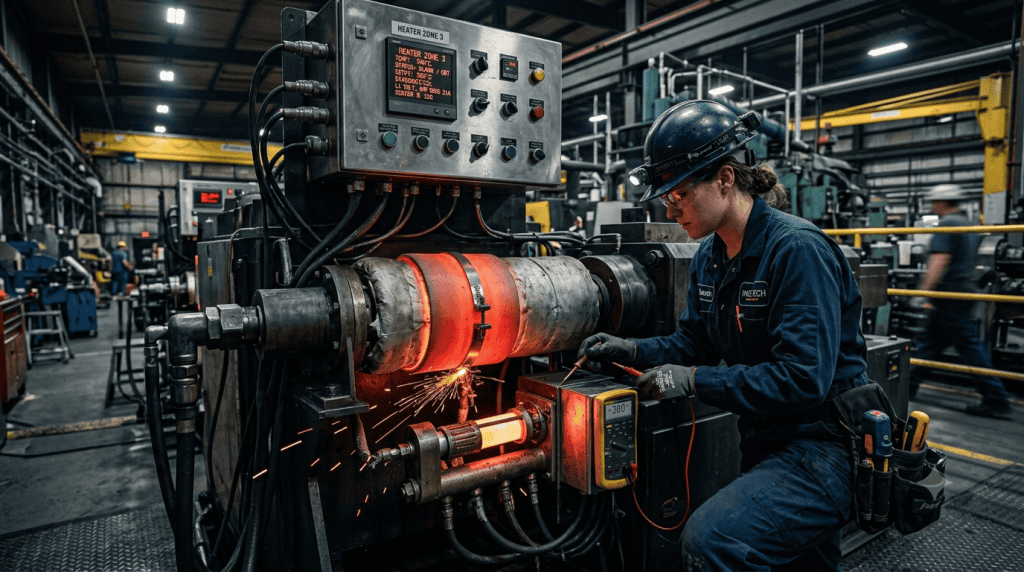
Industrial heaters are the backbone of many manufacturing processes. From plastic injection molding and packaging machines to food processing and pharmaceutical production, industrial heating systems ensure consistent temperature control and efficient operations.
However, like any industrial equipment, heaters can develop issues over time. A faulty heater can lead to:
❌ Production downtime
❌ Product quality issues
❌ Increased energy consumption
❌ Higher maintenance costs
❌ Unexpected equipment failure
Understanding the most common industrial heater problems and their solutions can help businesses minimize downtime and extend equipment lifespan.
At Antique Heating Elements, we regularly assist industries in diagnosing and solving heating element issues across various applications.
🔥 What Are the Most Common Industrial Heater Problems?
The most common industrial heater problems include uneven heating, heater burnout, overheating, insulation failure, temperature fluctuations, loose electrical connections, and reduced heating efficiency. Regular maintenance and timely replacement of heating elements can prevent most of these issues.
Why Industrial Heater Failures Occur
Most heater failures happen because of:
- Poor maintenance
- Voltage fluctuations
- Incorrect installation
- Excessive operating temperatures
- Moisture contamination
- Mechanical damage
- Aging heating elements
Early detection can prevent expensive production interruptions.
1. Heater Not Heating at All
Symptoms
- Heater remains completely cold
- Machine temperature does not increase
- Production process stops
Common Causes
Electrical Supply Failure
One of the most common reasons is a missing power supply.
Check:
- Circuit breakers
- Fuses
- Power cables
- Control panels
Broken Heating Element
The resistance wire inside the heater may have burned out.
This often occurs due to:
- Age-related wear
- Overheating
- Excessive voltage
Faulty Temperature Controller
Sometimes the heater is healthy but the controller fails to send power.
Solution
✔ Inspect electrical connections
✔ Check voltage using a multimeter
✔ Test heater resistance
✔ Replace damaged heating element
✔ Verify temperature controller operation
2. Uneven Heating
Symptoms
- Hot and cold spots
- Inconsistent product quality
- Temperature variations across machine surfaces
Common Causes
Improper Heater Installation
Band heaters that are not tightly fitted can cause uneven heat transfer.
Heater Aging
Over time, heating elements lose efficiency.
Surface Contamination
Dust, oil, and residue can reduce heat transfer.
Solution
✔ Ensure proper heater fitment
✔ Clean contact surfaces
✔ Replace old heaters
✔ Use quality insulation
3. Frequent Heater Burnout
Symptoms
- Heater fails repeatedly
- Frequent replacement required
Common Causes
Overheating
Running heaters above recommended temperatures significantly reduces lifespan.
Voltage Fluctuations
Excessive voltage increases current flow and damages heating elements.
Poor Heat Dissipation
If heat cannot transfer efficiently, internal temperatures rise dramatically.
Solution
✔ Install voltage stabilizers
✔ Use proper temperature controls
✔ Monitor operating temperatures
✔ Ensure adequate heat transfer
4. Temperature Fluctuations
Symptoms
- Temperature constantly rises and falls
- Inconsistent manufacturing results
Common Causes
Defective Thermocouples
Thermocouples provide temperature feedback.
If damaged, incorrect readings occur.
Faulty PID Controllers
Temperature controllers may malfunction and cause unstable heating.
Loose Wiring
Intermittent electrical connections create unstable operation.
Solution
✔ Replace damaged sensors
✔ Calibrate controllers
✔ Inspect wiring regularly
✔ Use high-quality temperature control systems
5. Moisture Damage
Symptoms
- Reduced insulation resistance
- Electrical leakage
- Circuit breaker tripping
Why It Happens
Industrial environments often expose heaters to:
- Humidity
- Water vapor
- Cleaning processes
Moisture enters heater insulation and affects performance.
Solution
✔ Store heaters properly
✔ Use moisture-resistant heaters
✔ Dry heaters before installation
✔ Conduct insulation resistance testing
6. Excessive Energy Consumption
Symptoms
- Rising electricity bills
- Reduced heating efficiency
Common Causes
Aging Heaters
Old heaters consume more power while producing less heat.
Poor Insulation
Heat loss forces heaters to work harder.
Incorrect Heater Selection
Using the wrong heater type reduces efficiency.
Solution
✔ Upgrade to energy-efficient heaters
✔ Improve insulation
✔ Use modern ceramic band heaters
✔ Conduct regular energy audits
7. Heater Overheating
Symptoms
- Burn marks
- Heater discoloration
- Smoke or burning smell
Common Causes
Incorrect Temperature Settings
Operators may accidentally set excessive temperatures.
Failed Thermocouple
Without feedback, heaters continue heating uncontrollably.
Poor Airflow
Lack of cooling causes heat accumulation.
Solution
✔ Verify controller settings
✔ Replace faulty thermocouples
✔ Improve ventilation
✔ Install safety cutoffs
8. Band Heater Problems
Band heaters are commonly used in:
- Plastic extrusion machines
- Injection molding machines
- Barrel heating systems
Common Issues
Loose Fitment
Poor contact reduces heat transfer.
Oxidation
High temperatures can oxidize heating components.
Barrel Deformation
Machine wear may prevent proper heater contact.
Solution
✔ Tighten clamping systems
✔ Inspect barrel condition
✔ Replace damaged heaters
9. Cartridge Heater Problems
Cartridge heaters are used in:
- Molds
- Dies
- Packaging machines
Common Issues
Incorrect Hole Size
Improper fit reduces heat transfer.
Air Gaps
Even small gaps affect efficiency.
Lead Wire Damage
Repeated bending damages electrical leads.
Solution
✔ Maintain proper hole tolerances
✔ Use high-density cartridge heaters
✔ Protect lead wires
10. Insulation Failure
Symptoms
- Electrical leakage
- Reduced heating efficiency
- Safety hazards
Causes
- Moisture ingress
- Physical damage
- Aging insulation materials
Solution
✔ Conduct insulation resistance tests
✔ Replace damaged heaters
✔ Store heaters in dry environments
Preventive Maintenance Checklist
Industries can prevent most heater failures through routine maintenance.
Daily Inspection
✔ Check temperature readings
✔ Inspect visible damage
✔ Monitor production quality
Weekly Inspection
✔ Tighten electrical terminals
✔ Clean heater surfaces
✔ Verify controller accuracy
Monthly Inspection
✔ Measure resistance values
✔ Test insulation resistance
✔ Check thermocouples
Annual Inspection
✔ Replace aging heaters
✔ Upgrade outdated controls
✔ Review energy efficiency
How Proper Maintenance Increases Heater Lifespan
Regular maintenance can:
✔ Increase heater life by 30–50%
✔ Reduce downtime
✔ Lower electricity costs
✔ Improve product consistency
✔ Enhance workplace safety
Industries Most Affected by Heater Failures
Plastic Industry
- Injection molding
- Blow molding
- Extrusion
Packaging Industry
- Sealing machines
- Shrink tunnels
- Wrapping equipment
Food Processing
- Drying systems
- Ovens
- Packaging lines
Pharmaceutical Industry
- Sterilization equipment
- Processing machinery
Why Choose High-Quality Industrial Heaters?
Many heater failures occur because low-quality heating elements are used.
Premium industrial heaters provide:
✔ Better temperature control
✔ Longer service life
✔ Reduced maintenance
✔ Higher energy efficiency
✔ Better production output
👉 Explore industrial heating products:
Antique Heating Elements
Conclusion
Industrial heater problems can significantly impact production efficiency and profitability. The most common issues include heater burnout, uneven heating, temperature fluctuations, moisture damage, and insulation failure.
By implementing preventive maintenance, using high-quality heating elements, and addressing issues early, businesses can maximize heater lifespan and reduce costly downtime.
Investing in reliable industrial heating solutions is one of the smartest ways to improve operational efficiency and long-term productivity.
❓ Frequently Asked Questions (FAQ)
Q1. Why do industrial heaters fail frequently?
Industrial heaters often fail because of overheating, voltage fluctuations, poor installation, moisture exposure, and lack of maintenance.
Q2. How long do industrial heaters last?
Most industrial heaters last between 3 to 10 years depending on operating conditions and maintenance practices.
Q3. What causes uneven heating in band heaters?
Loose fitment, contamination, aging elements, and poor installation are common causes.
Q4. How can I increase industrial heater lifespan?
Regular inspection, cleaning, proper temperature control, and quality replacement parts help extend heater life.
Q5. When should industrial heaters be replaced?
Replace heaters when heating efficiency decreases, insulation fails, or frequent breakdowns occur.
