
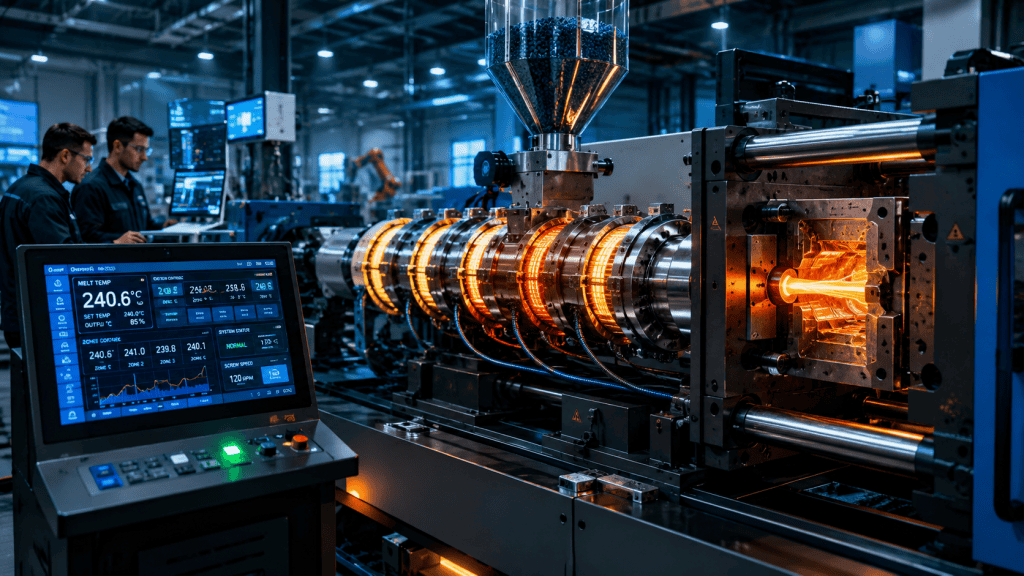
Injection molding is the backbone of the plastic manufacturing industry, and temperature control is the heart of the process. Without precise and reliable heating systems, producing high-quality plastic components becomes impossible. This is where Injection Molding Machine Heaters play a critical role.
In this complete guide, we will explore how these heaters work, their types, applications, benefits, and how choosing the right heating solution can significantly improve productivity and product quality in the plastic industry.
What is an Injection Molding Machine Heater?
An Injection Molding Machine Heater is a specialized industrial heating element used to heat the barrel, nozzle, and mold zones of an injection molding machine. Its primary function is to melt plastic granules uniformly so they can be injected into a mold cavity at the correct temperature and pressure.
Without proper heating:
- Plastic will not melt evenly
- Flow issues occur in molds
- Product defects increase
- Machine efficiency drops
Why Heating is Critical in Injection Molding
Temperature control is not just important—it is essential.
A proper heating system ensures:
- Uniform melting of plastic resins
- Stable viscosity of molten plastic
- Accurate mold filling
- Strong and defect-free products
- Reduced cycle time
Even a small temperature variation can result in:
- Warping
- Short shots
- Burn marks
- Flow lines
- Product rejection
Types of Injection Molding Machine Heaters
Different sections of the machine require different types of heaters. Let’s explore them:
1. Mica Band Heaters


Overview:
Mica band heaters are the most commonly used heaters for injection molding barrels.
Features:
- High dielectric strength
- Cost-effective
- Good heat transfer efficiency
- Stainless steel outer sheath
Applications:
- Injection molding machine barrels
- Extrusion machines
- Nozzle heating zones
Advantages:
- Easy installation
- Long service life
- Uniform heat distribution
2. Ceramic Band Heaters


Overview:
Ceramic band heaters are designed for high-temperature and energy-efficient operations.
Features:
- Excellent thermal insulation
- High energy efficiency
- Long-lasting heating performance
- High watt density capability
Applications:
- Heavy-duty injection molding machines
- High-temperature polymers
- Continuous production systems
Advantages:
- Saves energy up to 20–30%
- Better heat retention
- Suitable for demanding industrial conditions
3. Nozzle Heaters


Overview:
Nozzle heaters are compact heating elements designed for precise temperature control at the injection point.
Features:
- Flexible coil design
- High responsiveness
- Compact size
Applications:
- Injection nozzles
- Hot runner systems
Advantages:
- Fast heating response
- Precise temperature control
- Reduces material waste
4. Cartridge Heaters (for Mold Heating)


Overview:
Cartridge heaters are inserted into mold plates for precise localized heating.
Applications:
- Plastic molds
- Die casting systems
- Packaging molds
Advantages:
- High heat concentration
- Accurate temperature control
- Easy replacement
How Injection Molding Heaters Work
The process is simple but highly precise:
- Heater converts electrical energy into heat
- Heat is transferred to barrel/nozzle/mold
- Plastic granules inside melt uniformly
- Screw pushes molten plastic into mold cavity
- Controlled cooling produces final product
This cycle repeats thousands of times in industrial production lines.
Key Benefits of Using High-Quality Heaters
Investing in premium injection molding heaters leads to:
1. Improved Product Quality
- Smooth surface finish
- Accurate dimensions
- Reduced defects
2. Higher Production Efficiency
- Faster cycle times
- Reduced downtime
- Stable machine performance
3. Energy Savings
- Optimized heat utilization
- Reduced power consumption
4. Longer Machine Life
- Less mechanical stress
- Stable operating temperature
5. Cost Reduction
- Lower rejection rate
- Reduced maintenance costs
Common Problems Due to Poor Heating Systems
Using low-quality heaters can lead to serious production issues:
- Uneven melting of plastic
- Frequent machine breakdowns
- High energy consumption
- Product inconsistencies
- Heater burnout and failure
How to Choose the Right Injection Molding Heater
When selecting a heater, consider the following factors:
1. Temperature Requirement
Different plastics require different melting temperatures.
2. Watt Density
Higher watt density for faster heating applications.
3. Machine Size
Barrel diameter and length matter.
4. Material Type
Mica, ceramic, or stainless steel based on environment.
5. Energy Efficiency
Choose heaters that minimize power loss.
6. Durability
Industrial-grade construction ensures longer life.
Applications of Injection Molding Heaters
These heaters are widely used in:
- Automotive parts manufacturing
- Packaging industry
- Electrical component production
- Medical plastic devices
- Household product manufacturing
- Industrial plastic components
Future of Injection Molding Heating Technology
Modern industries are moving toward:
- Smart temperature-controlled heaters
- Energy-efficient ceramic systems
- IoT-based monitoring systems
- Rapid-response heating elements
This ensures better automation, reduced waste, and higher precision.
Conclusion
Injection molding machine heaters are not just accessories—they are the core performance drivers of plastic manufacturing systems. Choosing the right heating solution directly impacts product quality, production speed, and overall operational cost.
Whether it is mica band heaters, ceramic band heaters, nozzle heaters, or cartridge heaters, each plays a specific role in ensuring smooth and efficient plastic processing.
For manufacturers aiming to scale production and reduce defects, investing in high-quality industrial heating systems is a necessity, not an option.
